Showing posts with label Factortame. Show all posts

Tuesday, 19 November 2013

European law cases


VAN GEND EN LOOS(1963) and COSTA v ENEL (1964)  European law takes precedence over national law. The Van Gend case was a Dutch case that involved a conflict between Dutch and EEC law over custom duties.

COSTA v ENEL (1964)
In this case it was argued that the Italian courts were obliged to follow domestic law which conflicted with European Law. However, the ECJ held that “the member states have limited their sovereign rights…and have created a body of law which binds the nationals and themselves.”

FACTORTAME cases (1990-2000)
This case involved Spanish Fishermen operating in UK waters. The Thatcher Government introduced legislation to limit such fishing to UK companies. It was held in this case that a state is liable to compensate for breaches of Community Law ñ this involved Spanish Fishermen and the Merchant Shipping Act 1988.  This case emphasises that EU law is supreme over domestic laws. 

It was held here that the Merchant Shipping Act 1988 contravened Treaty provisions regarding discrimination on nationality. The ECJ said that joining the EU was voluntary and therefore the UK had chosen to limit their sovereign rights

 BULMER v BOLLINGER (1974)

The treaty is like an incoming tide. It flows up the estuaries and up the rivers. It cannot be held back.

Wednesday, 14 August 2013

Doctrine of Parliamentary Supremacy

As a democratically elected body, parliament is the supreme law making body in the UK. 


Parliament can legislate on any subject matter, meaning there are no limits on what they can make laws about. An example of this is the Parliament Acts 1911 and 1949 which limited the powers of the House of Lords to block a Bill by voting against it. 
Parliament cannot bind their sucessor, meaning each new Parliament should be free to make or change what laws they wish. There are some laws which cannot be repealed, e.g. Act of Settlement in 1700 changed the line of sucession to the throne. It affected who was entitled to be King or Queen so after 300 years this could not be repealed.
Laws made by Parliament cannot be overruled by others, even where the Act of Parliament  may have been made because of incorrect information. See the case of British Railways Board v Pickin.
One limitation to Parliamentary supremacy is the membership of the European Union. The UK joined the European Union in 1973 by passing the European Communities Act 1972, this membership means that European Union law takes priority over English Law. e,g, Merchant Shipping Act 1988 states that 75% of directors and shareholders in certain businesses had to be British , this contradicted EU law and there was changed as discussed in the Factortame case.

The UK constitution...?


Many countries have a document called the constitution. It is a document which describes:
  •          the powers the government has in a state
  •          the relationship between different parts of the state
  •          the relationship between government and the citizen

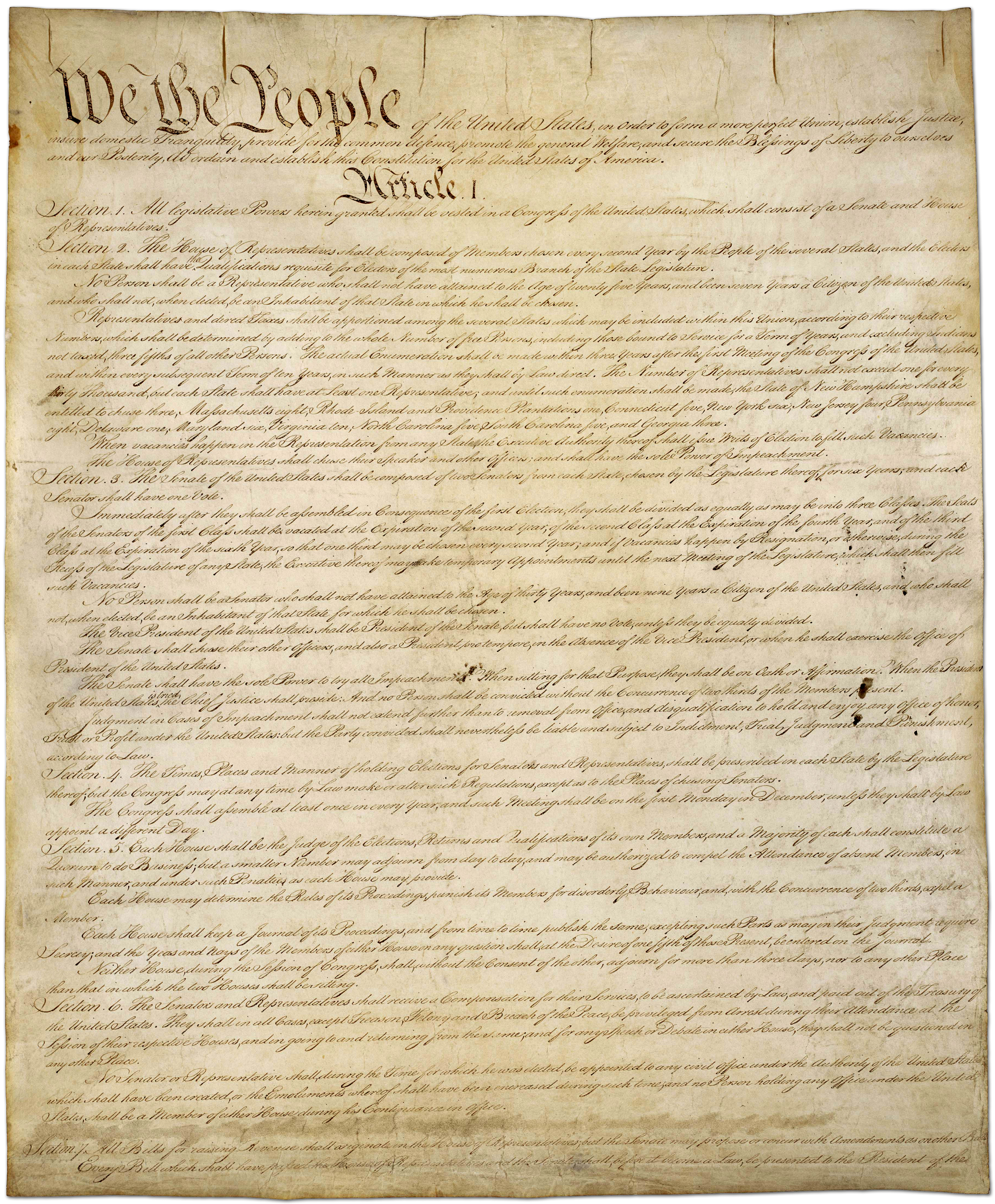
Probably the most familiar to us is the American constitution which you can read about here

In the UK we don't have a document called the constitution but does this mean we don't have a constitution? 

The US constitution is codified which means that the contents is collected together and collected in one place. The UK does have a constitution but it is not codified because it has never been collected together and written down in one document, it's all over the place. 

An example of an early form of the British constitution is the Magna Carta in 1215. This was  one of Britain's first steps to democracy because it set up a committee of 25 barons at any time overrule the will of the king if he defied the charter (Clause 61) and created the law that no freeman can be punished except through the law of the land. 

There are lots of other sources of the UK constitution including: 

  1. Statute law - Acts of Parliament that are constitutional
  2. Common law - Based on past customs and precedence (when Judges interpret laws and further legal cases use that interpretation) i.e the law has evolved
  3. Conventions - Unwritten rules that are followed
  4. Works of constitutional authority - Books about the government which help to interpret the law
  5. EU laws and treaties - Laws made by the EU that overrule UK law 

So, should it be written in one easy to read document? 

Some would argue that interpretation of the law would be more precise if there was a document to refer to (see the Factortame case) and our membership of the European Community has made things a little confusing. A written document would also make it harder for the leading party to change the laws in their favour; it would reduce 'elective dictatorship'. 

However, the primary reason for a country to create a written constitution is they have undergone a major change such as a war or a revolution, the UK has not gone through such a massive change (arguably since 1066) and therefore our system has evolved as we have and continues to change with us.