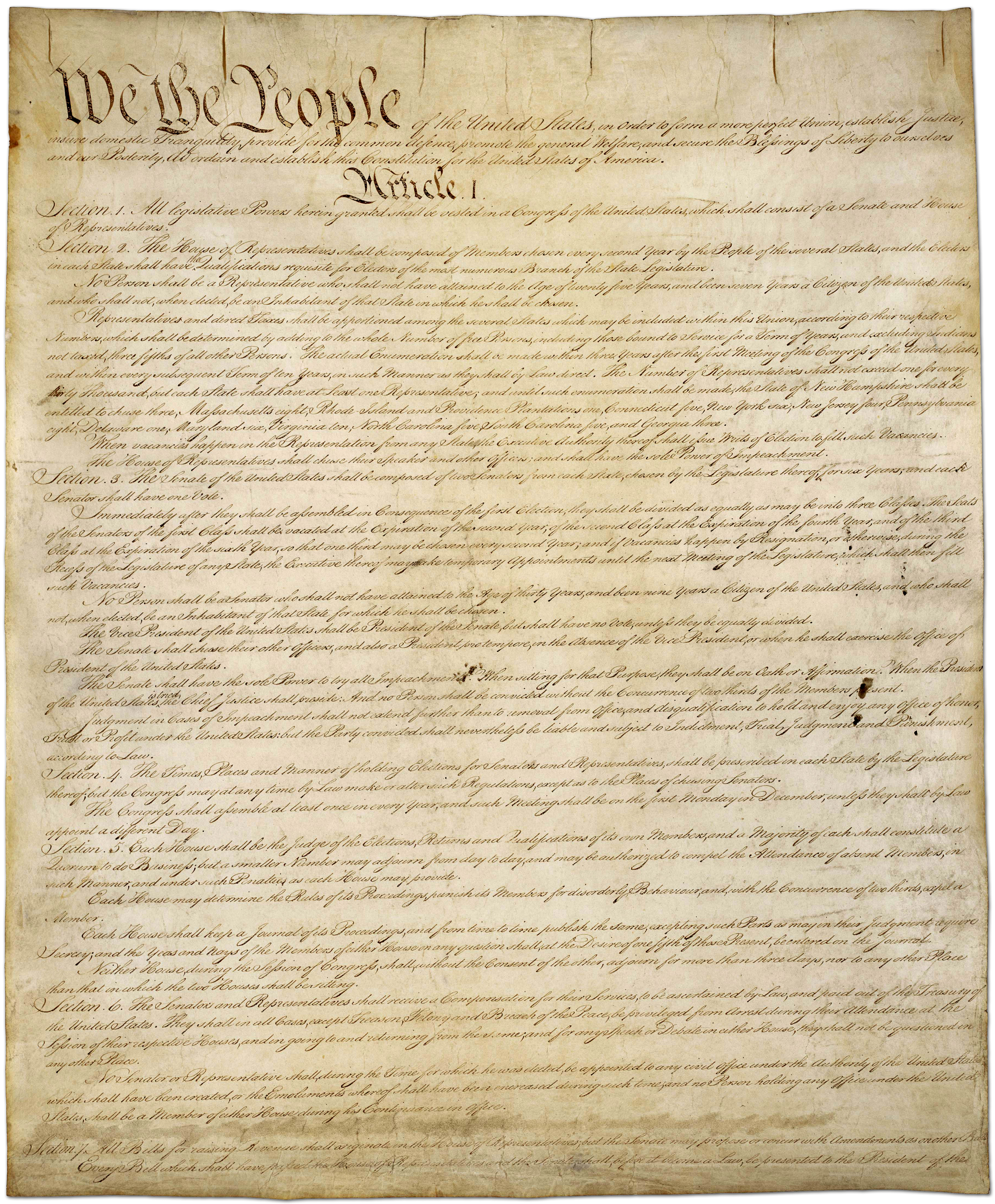
Many countries have a document called the constitution. It is a document which describes:
- the
powers the government has in a state
- the
relationship between different parts of the state
- the
relationship between government and the citizen
Probably the most familiar to us is the American constitution which you can read about here.
In the UK we don't have a document called the constitution but does this mean we don't have a constitution?
The US constitution is
codified which means that the contents is collected together and collected in one place. The UK does have a constitution but it is not codified because it has never been collected together and written down in one document, it's all over the place.
An example of an early form of the British constitution is the Magna Carta in 1215. This was one of Britain's first steps to democracy because it set up a committee of 25 barons at any time overrule the will of the king if he defied the charter (Clause 61) and created the law that no freeman can be punished except through the law of the land.
There are lots of other sources of the UK constitution including:
- Statute law - Acts of Parliament that are constitutional
- Common law - Based on past customs and precedence (when Judges interpret laws and further legal cases use that interpretation) i.e the law has evolved
- Conventions - Unwritten rules that are followed
- Works of constitutional authority - Books about the government which help to interpret the law
- EU laws and treaties - Laws made by the EU that overrule UK law
So, should it be written in one easy to read document?
Some would argue that interpretation of the law would be more precise if there was a document to refer to
(see the Factortame case) and our membership of the European Community has made things a little confusing. A written document would also make it harder for the leading party to change the laws in their favour; it would reduce 'elective dictatorship'.
However, the primary reason for a country to create a written constitution is they have undergone a major change such as a war or a revolution, the UK has not gone through such a massive change (arguably since 1066) and therefore our system has evolved as we have and continues to change with us.